Overview:
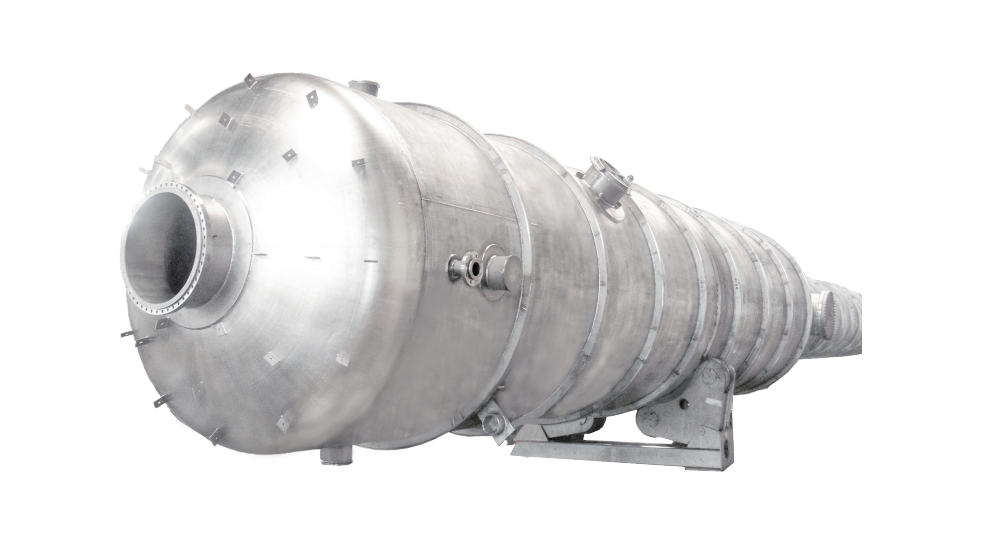
Tower equipment is a key device used for gas-liquid or liquid-liquid mass transfer and heat transfer in the process industry, widely applied in fields such as petrochemicals, chemicals, pharmaceuticals, environmental protection, and new materials.
According to functions, it can be divided into distillation towers, absorption towers, desorption towers, scrubbing towers, reaction towers, etc.: according to structural forms, it is divided into packed towers, tray towers, etc.
Working Principle:
Tower equipment mainly conducts mass or energy exchange in the tower through countercurrent or cocurrent contact between gas and liquid.
In the distillation tower, separation is carried out by utilizing the boiling point differences of various components;
In the absorption tower, specific components in the gas are absorbed by the liquid;
In the desorption tower, solutes in the liquid are released under the action of thermal energy or inert gas.
Tray (sieve plate, float valve plate, etc.) or packing (structured/random) can be arranged in the tower to enhance gas-liquid contact efficiency and improve separation or mass transfer effects.
Features:
Multi-functional process adaptation: suitable for various mass transfer processes such as separation, absorption, and reaction,
High mass transfer efficiency: advanced tray/packing design increases gas-liquid contact area.
Modular design: the tower body can be manufactured and assembled in sections, facilitating transportation and installation.
Sturdy and durable structure: made of stainless steel, suitable for working conditions with high temperature, high pressure, and corrosive media.
Flexible customization: tower diameter, tower height, and internal component forms can be customized according to medium properties and process requirements.
Convenient operation and maintenance: equipped with auxiliary structures such as manholes, observation ports, spray ports, and sewage outlets.
Our product center maintains a steadfast focus on innovation and has secured hundreds of technological patents.
9AM - 5:30PM
Our Office Hours: Mon. - Fri.
TEL:+86 18723607109
EMAIL:Server@sovix.cn
ADD:ChongQing China