

Applications in the Automotive Industry
Basalt fiber, with its lightweight, high-temperature resistance, and eco-friendly properties, is gradually penetrating multiple sectors of automotive components. In the future, driven by the demand for new energy vehicles and green manufacturing, basalt fiber may emerge as a new strategic material following carbon fiber, aiding the automotive industry in achieving low-carbon transformation. This spans passenger vehicles, commercial vehicles, trucks, and agricultural vehicles, with primary applications including the following components:
1. Suspension components, front/rear bumpers, instrument panels, etc.;
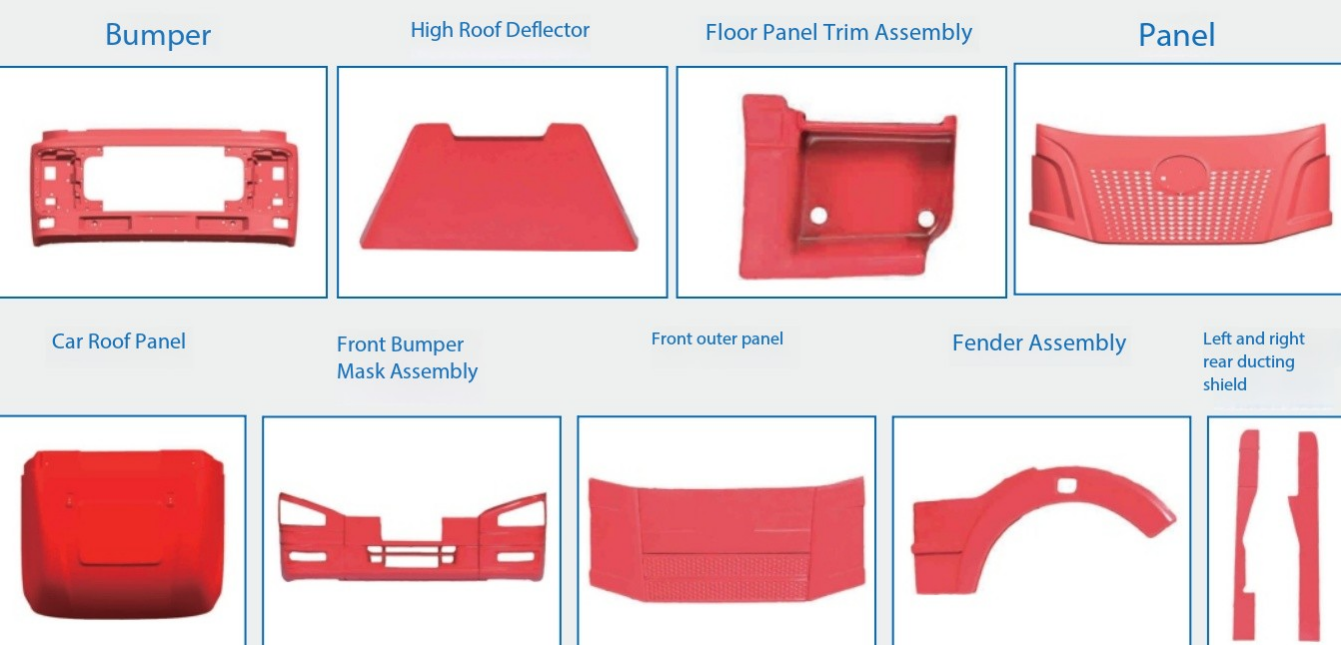
2. Body structures and components, body shells, hardtops, floors, doors, radiator grilles, front panels, spoilers, trunk lids, sun visors, fenders, hoods;
3. Under-hood components: air conditioning vent housings, air ducts, radiator assemblies, brake system components, and engine sound insulation panels;
4. Interior trim parts: door panels, door handles, steering columns, steering linkage components, mirror frames, and seats;
5. Other components including electrical parts like pump covers and drive system parts such as gear sound insulation panels. Among these, bumpers, roof panels, front fascia components, engine hoods, engine sound insulation panels, and front/rear fenders are the most critical and highest-volume items.
Technical Advantages:
Characteristics: Value to the Automotive Industry
Lightweight & High Strength: Density of only 2.6-2.8 g/cm³, tensile strength reaching 2000-4800 MPa, significantly reducing vehicle weight and enhancing energy efficiency.
High-Temperature & Corrosion Resistance: Withstands temperatures of 500°C-900°C and resists acid/alkali corrosion, suitable for engine-adjacent and harsh-environment components.
Environmental Sustainability & Cost-Effectiveness: Derived from natural basalt rock, production generates minimal pollution. Lower cost than carbon fiber, aligning with circular economy principles.
Multifunctional Compatibility: Enables “structure-function integration” designs through coating modifications (e.g., electromagnetic shielding layers) or blending with glass fiber/carbon fiber composites.
Prev: Basalt Fiber Medical Devices
Next: Basalt Fiber Bus Shelter

Our product center maintains a steadfast focus on innovation and has secured hundreds of technological patents.
9AM - 5:30PM
Our Office Hours: Mon. - Fri.
TEL:+86 18723607109
EMAIL:Server@sovix.cn
ADD:ChongQing China