
Basalt Fiber Reinforced Polymer (BFRP) photovoltaic mounting systems are composed of basalt fibers, resin, and additives. Through the pultrusion process, the mixture is heated and drawn through a mold under traction force, cured, and continuously extruded into profiles of unlimited length.
Advantages of Basalt Fiber Photovoltaic Mounting Systems:
1. Low Density BFRP density ranges from 1800 to 2100 kg/m³, representing only 23% to 27% of steel density (7850 kg/m³). This characteristic facilitates transportation, simplifies construction, and eliminates the need for lifting equipment during installation, significantly reducing transportation and installation costs. For projects installed on barren mountains or slopes, the savings in transportation and installation costs are particularly pronounced.
2. High Strength
BFRP exhibits a tensile strength of 722 MPa, which is 2.15 to 3.07 times that of steel (Grade 2 steel: 235 MPa; Grade 1 steel: 335 MPa). When employing equivalent-strength cross-section design, smaller profile dimensions can be used, thereby reducing support weight and further lowering support costs.
3. Excellent Corrosion Resistance
After 60 days immersion in sulfuric acid (H₂SO₄) solution at pH=3 (simulating 30 years of acid aging under natural conditions), strength reduction is approximately 7.2%. After 60 days immersion in sodium hydroxide (NaOH) solution at pH=12 (simulating 30 years of acid aging under natural conditions), strength reduction is approximately 6.7%. After six months of immersion in water at 25°C (simulating 50 years of moisture aging under natural conditions), strength decreased by 4.34%. Replacing spiral steel pipe piles with BFRP columns directly exposed to groundwater significantly reduces groundwater corrosion on foundations, greatly extending the service life of foundations and even entire structures. Substituting traditional steel structures with BFRP structures directly exposed to the atmosphere substantially mitigates atmospheric corrosion, thereby enhancing structural longevity.
4. Strong UV Resistance
After 5 weeks of exposure at 26°C under UV intensity of 0.2 MJ/(m²·h) (simulating 30 years of natural UV aging), strength decreases by approximately 8%. Applying an UV-protective coating to GFRP surfaces achieves 99.9% UV blocking. The exceptional UV resistance of BFRP materials further extends the service life of structures directly exposed to sunlight. 5. High Design Flexibility
BFRP structures can be customized by selecting matrix and fiber materials, formulations, and production processes to meet diverse requirements for strength, stiffness, corrosion resistance, UV resistance, and product color. This fully leverages BFRP's high specific strength advantage for economical material utilization.
6. Easy Formability
BFRP profiles can be manufactured into various shapes and specifications based on practical needs.
7. Application Fields
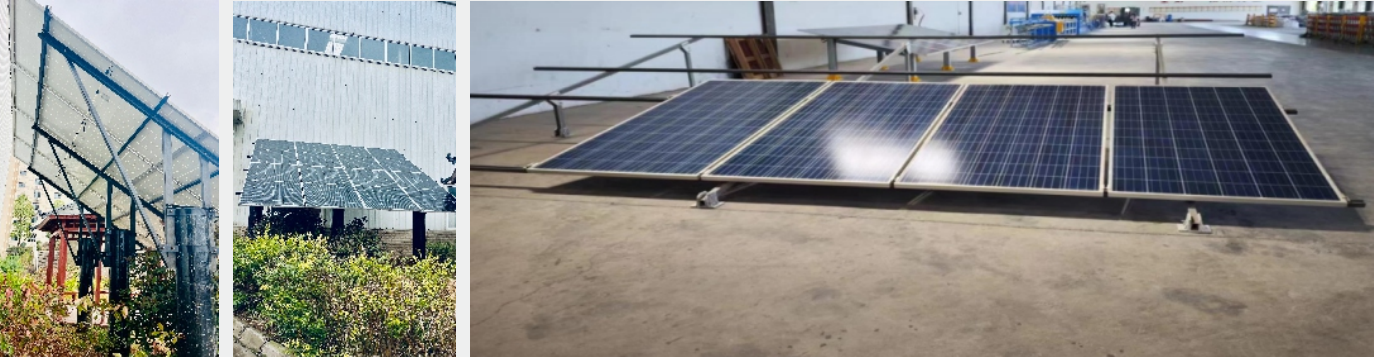
Currently, BFRP profiles are primarily used in two areas: greenhouse structures and solar panel supports. Different configurations are adopted based on regional conditions (inland, coastal, tidal flat areas, etc.). Greenhouse supports and various solar panel support types (single-column, double-column, inclined-leg) have been successfully applied in practical projects, including photovoltaic solar installations and greenhouse frameworks.

Our product center maintains a steadfast focus on innovation and has secured hundreds of technological patents.
9AM - 5:30PM
Our Office Hours: Mon. - Fri.
TEL:+86 18723607109
EMAIL:Server@sovix.cn
ADD:ChongQing China